
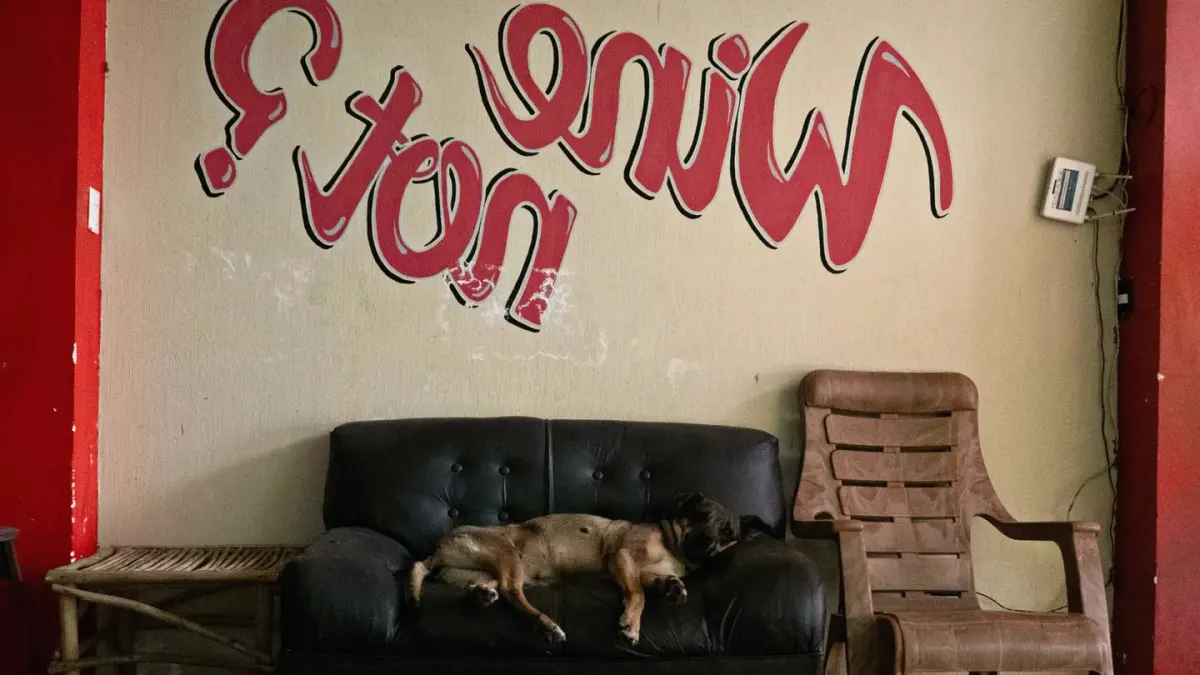
Most so-called jealous moments look less like rivalry and more like a dog trying to keep a safe routine intact.
In a widely discussed experiment published in PLOS ONE, dogs pushed, nosed, and wedged themselves between their owner and what looked like a rival dog, and they did it far more than when the owner simply read a book. A common question is whether that proves envy, and my answer is simpler and more useful to you.
You are seeing resource guarding of attention, space, and predictability. From a structure and function point of view, closeness to you helps support maintaining a steady nervous system, regular movement, and restful recovery between bouts of play. When a new person, baby, partner, or pet interrupts that pattern, some dogs brace, crowd, bark, paw, or go still because the routine that keeps their body settled feels threatened.
Take Marlon, a 6-year-old neutered Beagle-Harrier mix in Houston living with his owner Pamela. When Pamela started evening video calls at the couch, Marlon began whining and nosing her hands within about two minutes, then settled only when she kept one hand on his chest. That detail matters more than the label jealousy. It tells you the trigger, the timing, and the support that helps him stay settled.
What crowding, nudging, and barking usually mean
You know the scene. You hug someone, pick up another dog, or talk in a high voice to a baby, and your dog inserts their head, barks once, mouths your sleeve, or sits hard on your feet.
Vets often see this cluster when affection becomes unpredictable. The dog is not plotting. The dog is trying to restore contact and rhythm. Watch the body rather than the story in your head: forward ears and loose wagging with soft eyes points toward attention-seeking, while freezing, hard staring, lip lifting, or blocking doorways points toward guarding that needs more distance and training help.
The American Kennel Club describes much the same pattern, noting that trainers treat these moments as learned attention-seeking or guarding rather than human-style envy.
Consistency helps more than correction.
How to keep the routine steady when affection feels contested
Keep your handling boring and repeatable. That steadiness may help support maintaining relaxed muscles, easier movement on walks, and smoother wind-downs after excitement, rather than fixing behavior in a day.
Start by paying the calm position before the pushy one appears. If your dog crowds hugs, station them on a mat three to six feet away with a chew, then greet briefly and return to reward the mat. You are teaching that your attention leaves and returns on a loop. Short loops win.
Add movement before togetherness. A ten-minute sniff walk, then a quiet sit while you greet a guest, gives the body a job and a recovery period. Dogs that pace at night often struggle with the same unsettled arousal, which is why I point owners to our nighttime pacing guide when restlessness carries past bedtime.
Keep greetings low and short. Crouch sideways, pet for three seconds, pause, and only continue if the dog stays soft. If you live with a senior who stiffens or stumbles when jostled for attention, read our piece on a senior dog suddenly unable to get up so you do not mistake pain for attitude.
What I would not do is scold, crate as punishment, or force sharing. Pushing a worried dog away tends to raise arousal and tighten the body you want to keep loose.
When I call it stress and change the plan
Most cases stay mild and trainable. Call your veterinarian or a credentialed trainer if you see snapping, guarding food or sleeping spots from a child, escalating barking over two to three weeks, or any bite, however inhibited. Sudden change in an older dog also deserves a medical look for pain, vision loss, or cognitive shift before you label it jealousy.
Keep notes for one week: trigger, time of day, what you did, and how long recovery took. A dog that rebounds in under a minute is learning. A dog that stays wired for 30 minutes needs more space, fewer rehearsals, and a slower plan.
You do not need your dog to share perfectly. You need a routine clear enough that your dog can rest while you love other people too.
Frequently asked questions
Do dogs feel jealousy like people do?
Researchers have documented jealous-like behaviors such as pushing between an owner and a rival, but dogs likely experience a simpler form tied to attention and routine rather than complex human envy.
How should I respond when my dog pushes in during hugs?
Redirect calmly to a mat a few feet away, keep greetings brief, and reward settled behavior so your dog learns attention comes back on a predictable loop.
Sources
- Jealousy in Dogs — PLOS ONE