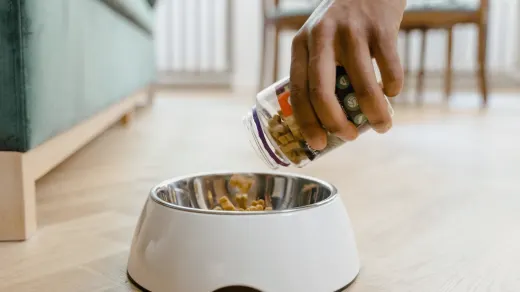
7 Rules for Timing a Dog Probiotic Trial Right
A vet explains how long to trial dog probiotics for loose stool, gas, and diet changes, and when to stop.

Our reviewing vets score the best probiotic for dogs, weighing strain evidence, CFU counts, and digestive-support claims per label.
58 guides in this section.
A vet explains how long to trial dog probiotics for loose stool, gas, and diet changes, and when to stop.

Learn how baking heat affects live probiotics in dog treats and what to choose instead for gut support.
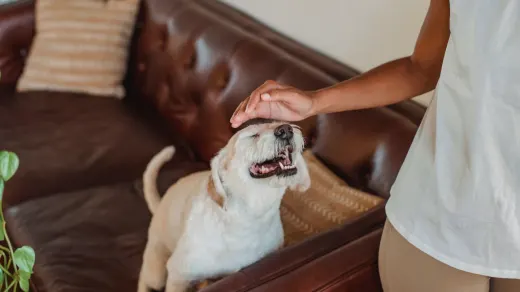
Learn when mixing a dog probiotic into wet food works, how heat and timing affect live cultures, and how to serve it for consistent results.

A vet-panel explainer on Enterococcus faecium for dogs — strain specificity, what it does in the gut, when it fits, and what evidence would change our view.

A vet-reviewed explainer on heat, moisture, and handling mistakes that lower probiotic viability for dogs, and simple storage habits that help.
Learn what flea bites look like on a dog's belly, how to tell them from other rashes, and when to call your vet.

What vets weigh before adding a probiotic — diet, health history, strain fit, and when to wait.

How spore-forming Bacillus strains survive, germinate, and support gut balance in dogs — and when they make sense.

Learn how to read a dog probiotic powder label — strains, CFU, prebiotics, testing, and feeding fit — with a whole-patient view.
A vet explains what galacto-oligosaccharide fibre may help support in dogs, when it is worth trying, and how to add it calmly.
A vet panel weighs Lactobacillus plantarum for dogs — where evidence is thin, how to trial it safely, and when to skip single strains.
A vet panel weighs spirulina for dogs — nutrients, safety, contamination risk, and when to skip it.
A veterinary review of fermented goat milk for dogs — what fermentation changes, where evidence is strong or thin, and how to use it to support normal digestion.
A vet review of marshmallow root for dogs — mucilage action, gut lining support, safety limits, and when food-first care matters more.
A vet-panel explainer on psyllium husk for dogs — how soluble fiber works, what dog evidence shows, and when to call your vet.
A board-certified internist explains how pumpkin fiber supports normal digestion in dogs, where evidence is thin, and how to use it safely.
Our vet panel weighs CFU count against strain pairing, prebiotics, postbiotics, and testing to decide when 30 billion CFU is worth paying for.
A vet panel review of beta-glucan for dogs — what it is, how soluble fiber supports normal stool and gut function, and when it is not enough.
Expiration dates on dog probiotics signal live-count guarantees, storage limits, and when to replace the jar.
Our reviewing vets score the best probiotic for dogs on strain identity, CFU dose, prebiotic pairing, and third-party testing — not marketing claims.
A vet panel reviews which puppy probiotic strains support normal digestion and gut balance, how prebiotics and postbiotics fit, and our top pick.
Our reviewing vet weighs coconut oil against digestive enzyme supplements for canine gut health, scoring evidence, dose, and real-world fit.
Our reviewing vets compare omeprazole against digestive supplements like Boops Probiotic 30 Billion for dogs with reflux — what each is actually built to do, and when each one earns its place on the counter.
Our reviewing vets compare papaya-based enzyme support against pancreatic-style digestive enzyme supplements and a multi-active probiotic chew, scored on evidence, dose, and fit.
Our panel compares unflavored Pedialyte against a dedicated dog gut-support supplement for diarrhea, and names a clear winner for each job.
A GI-focused vet explains heat-killed probiotics and postbiotics for dogs, what stability means, and when live strains still make more sense.
A vet explains what MOS may support in dog digestion, where evidence is thin, and how to judge labels and dose.
A vet-panel explainer on yeast fermentation products for dogs — what they are, what canine data suggest for normal stool and gut function, and how to judge labels.
Apple pectin is a soluble fiber that may support normal stool quality in dogs. Our vet panel reviews fermentation, gut hormones, and when to skip it.
Why dogs get loose stool after boarding, what the evidence says about fixing it, and when soft stool signals something the kennel didn't cause.
Loperamide (Imodium) can help some dogs with simple diarrhea, but MDR1-mutation breeds and certain causes make it dangerous. Here's the panel's decision checklist.
A whole-system look at whether probiotics before a dog's scheduled surgery are worth it — what the evidence shows, what fasting rules mean for timing, and where the approach falls short.
Why rich, unfamiliar holiday treats often cause short-term gas in dogs, how TCVM food stagnation maps to acute dietary change, and when to call the vet.
Why switching dog food brands causes diarrhea, how long loose stool should last, how to transition food safely, and red flags that need a vet visit.
How to support a puppy's gut during weaning with gradual diet transition, hygiene, and evidence-anchored probiotic use — plus when to call the vet.
A vet explains soluble vs insoluble fiber for dogs, safe food sources, how much to add, and when loose stool needs a vet visit.
Are probiotics safe for young puppies? A dual-boarded vet explains mechanism, label reading, and when to call your vet.
A vet panel explainer on the gut-immune link in dogs, what supports balance, and where the evidence is strong, thin, or mixed.
Missed your dog's daily probiotic chew? Learn whether to double up, skip, or restart, plus when stool changes warrant a vet call.
A vet-panel explainer on the most studied probiotic strains for dogs, how to read strain names and dose pairings, and when to ask your vet.
How probiotics, prebiotics, feeding routine, and rest may help support normal digestion in nursing mother dogs, plus when to call your vet.
Should you rotate probiotic strains for your dog? A TCVM vet explains when to stay the course, when to switch, and how to read the gut pattern.
Why kennel diet switches upset digestion and how to support normal gut function before, during, and after boarding.
Daily dog gas with bad odor usually traces to diet, eating habits, and gut fermentation. A vet explains when to adjust food and when to call your vet.
A vet's field guide to telling true constipation from a normal quiet day in a dog's gut — what to check, what to skip, and when to call.
A vet panel walks through when a puppy is actually ready for adult food, the 7-to-10-day switch that prevents GI upset, and the one case where "wait it out" is the wrong call.
A board-certified internist walks through the mechanisms behind senior-dog constipation — dehydration, mobility loss, prostatic and neurologic causes, and when fiber actually helps.
A vet panel's checklist for deciding when post-surgical diarrhea in dogs needs a call now versus watchful waiting at home.
A veterinarian's evidence-based look at Bifidobacterium animalis in older dogs — what the safety data actually shows, where it falls short, and the edge cases that change the call.
A vet panel look at whether the probiotic yeast Saccharomyces boulardii is safe to give a dog with a history of yeast-related skin or ear flares, and how to introduce it responsibly.
A dual-boarded internist and clinical pathologist walks through what the controlled data actually shows about giving digestive enzyme supplements to dogs whose pancreas is working normally.
A vet-panel guide to what actually helps a dog's gut microbiome recover after antibiotics — and what the evidence still can't tell you.
Our panel explains why sudden diet changes, not the trip itself, cause most travel-related dog stomach upset, and exactly how much of your dog's food to pack.
Daily probiotics aren't automatically better for dogs. A vet walks through when continuous dosing helps, when it's noise, and the one edge case that changes the answer.
A panel-style walkthrough of what to check first, what's normal digestive upset, and when an extra probiotic chew or two becomes a genuine emergency.
A dual-boarded vet weighs the gut-brain research on canine anxiety — what's well-supported, what's thin, and how to read a calming claim before you buy it.
A methodical, evidence-anchored breakdown of how much plain canned pumpkin to feed a 50-pound dog with diarrhea, why the fiber works the way it does, and when it's the wrong tool.
How to tell a passing bout of soft stool from a genuinely sensitive gut, what the panel's evidence actually supports, and when to stop guessing and get bloodwork.