

A 4-year-old 58-pound Boxer mix came in after three weeks of soft, bulky stools that firmed up, then loosened again every time his owners tried a new kibble. They had already bought plain canned pumpkin, a probiotic chew, and now a bag of psyllium husk powder from the grocery aisle. Their question was practical, not academic: with money tight and a vet visit already on the card, was psyllium worth trying at home, or would it just add another variable? We talked through what fiber can and cannot do, what would trigger a recheck, and why supplements support wellness, not replace medicine.
How psyllium behaves once it is swallowed
Psyllium husk is mostly soluble, gel-forming fiber from Plantago ovata seed husks. In plain terms, it holds water.
That water-holding is the whole mechanism. Dry powder swells in the stomach and small intestine to form a viscous gel, which slows transit slightly, adds bulk in the colon, and gives colonic microbes more fermentable substrate. Fermentation yields short-chain fatty acids that nourish colonocytes and help maintain normal stool form. MedlinePlus describes psyllium as a bulk-forming fiber that absorbs liquid in the intestines, and the NIH Office of Dietary Supplements explains that soluble fibers of this type are readily fermented and contribute to normal bowel function through bulk and fermentation.
Dogs handle that pathway in the same broad way people do, but dose tolerance, hydration, and underlying disease differ. A gel that supports normal firmness in one dog can cause gas, cramping, or constipation in another if water intake is low or the starting diet is already high in fiber.
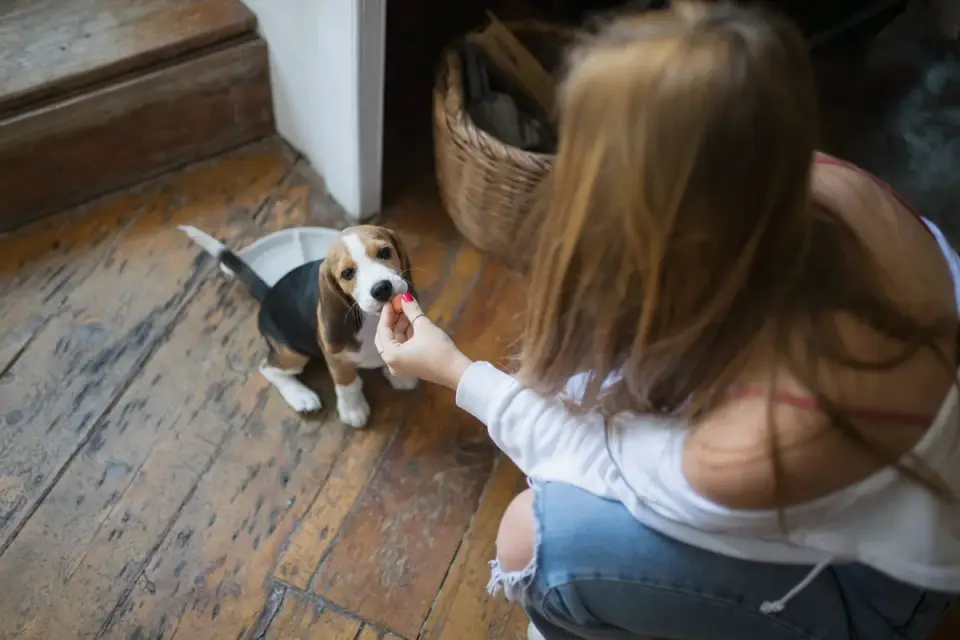
I saw the tradeoff a few months later in a senior beagle who had done well on a simple switch to a moderate-fiber adult diet for occasional loose stools after table scraps. The owner, hoping for faster results before a six-night boarding stay, layered psyllium powder on top of pumpkin and a new probiotic all in the same week. By night four the dog was passing small, hard pellets, straining on two of three morning walks, and drinking less than usual. We stopped everything extra, returned to water, walks, and the base diet, and stools normalized within 48 hours. More fiber was not better; it was just more.
Where the evidence is strong, thin, or mixed
For general fiber physiology, the evidence is strong: soluble fiber holds water, adds bulk, and is fermented to short-chain fatty acids. That mechanism is well described in human and veterinary nutrition references.
For psyllium specifically in dogs, the evidence is thin. There are no large, long-term randomized trials in healthy pet dogs establishing an effective dose for normal stool quality, and no proof that psyllium improves the microbiome in a predictable direction. Most veterinary use is extrapolated from human data, small clinical experiences with fiber-responsive large-bowel signs, and diet trials where fiber is one of several changed variables.
That distinction matters. I will recommend a low-cost fiber trial for a stable adult dog with mild, intermittent soft stools when appetite, energy, weight, and hydration are normal. I will not present it as treatment for chronic diarrhea, bloody stool, vomiting, weight loss, or straining that persists beyond a day or two.
My position is this: weigh the cost and the access before the ideal. A grocery-store fiber is cheap and widely available, while a prescription gastrointestinal diet or endoscopy is not. For a stable dog, a careful, hydrated, single-variable fiber trial is a reasonable first wellness step. What would change my mind is a controlled canine trial showing no effect on fecal form or, conversely, a clear dose-response with safety data — right now we have neither, so I stay cautious and conditional.
Owners comparing approaches can get context from our broader gut-health reviews, including The Best Probiotic for Dogs: Our Vet Panel’s 2026 Verdict and Can I Give My Dog Imodium for Diarrhea? Our Panel’s Verdict.
When the usual fiber advice has to bend
A 9-month-old 18-pound terrier mix adopted in March showed why access changes the plan. She had soft stools since adoption, but also a dull coat, a potbelly despite lean ribs, and a foster note about missed deworming. The owner wanted to start psyllium that day because a friend’s dog had firmed up on it.
We bent the usual advice. Instead of fiber first, we prioritized a fecal exam and deworming history, kept the diet constant, and held off on any supplement for one week. The fecal test found roundworms. After appropriate veterinary care and a 0.6-mile twice-daily walk routine that let the owner actually see every stool, form improved without any added fiber.
Quality control is the other access issue. Pet supplements vary in testing, and the National Animal Supplement Council notes its role in quality standards and auditing for animal supplements, which is one factor our panel weighs when any fiber or gut product makes label claims.
Call your veterinarian promptly for red flags: blood in stool, vomiting with lethargy, abdominal pain, no stool for more than 48 hours after starting fiber, or repeated straining. Keep fresh water available at all times with psyllium, introduce it gradually mixed with wet food, change only one variable at a time, and stop if gas, bloating, or constipation appears.
The verdict is narrow. Psyllium likely supports normal digestive regularity by the same bulk-and-fermentation logic as other soluble fibers, but canine-specific proof is limited. Use it as an affordable, short-term wellness aid for stable, mild soft stools — not as medicine for disease.
Frequently asked questions
Can psyllium husk firm up soft stools in dogs?
It may help support normal stool form by holding water and adding bulk, but response varies and canine trial data are limited. Keep water available, change one variable at a time, and call your vet if stools contain blood, or if vomiting, lethargy, or straining occur.
Is psyllium husk safe to try at home?
Plain psyllium without sweeteners or flavorings is often tolerated in small, gradual amounts with food and water, but it can cause gas or constipation, especially if a dog drinks little. Skip home trials for puppies with parasites, dogs with chronic diarrhea, or any dog on medication without veterinary guidance.
Sources
- Psyllium: MedlinePlus Drug Information — MedlinePlus
- Quality Standards and Auditing for Animal Supplements — National Animal Supplement Council