
On this page
Peggy noticed it on the sidewalk in Salem, Oregon. Pogo, her 13-year-old neutered male Pomsky mix, used to cover six blocks without stopping. Now he managed three, then sat down, panted, and pawed at his mouth.
Vets often see that pattern. Owners read it as low energy or old age. In practice, reduced daily activity in an older dog is rarely one thing. It is joints, body condition, heart and lung fitness, brain aging, and — overlooked more than it should be — the mouth.
That mouth-to-body link shapes how I review this topic. Plaque drives periodontal inflammation. Periodontal inflammation supports a low-grade systemic burden that makes movement less comfortable and recovery slower. When the mouth hurts, the dog walks less. When the dog walks less, muscle, joint support, and circulation all decline. Activity supports healthy aging, and healthy teeth support activity.
Where daily movement earns its keep
For senior dogs, steady activity supports what aging threatens first: lean muscle, joint range of motion, healthy weight, cardiovascular fitness, sleep quality, and cognitive engagement. The Dog Aging Project follows thousands of companion dogs to sort which lifestyle factors track with longer healthspan, and regular activity and social engagement keep emerging as protective patterns rather than background noise.
This is not about marathon exercise. It is about repeated, moderate loading through the day. Short walks preserve hind-limb muscle. Sniff walks preserve brain engagement. Gentle play preserves tendon and joint mobility. Rest days still count, but complete rest weeks cost older dogs muscle fast.
Owners comparing notes on personality change can find context in Senior Dog Personality Changes: Normal Aging or Early Dementia?, because withdrawal from play and walks sits on the line between normal slowing and early cognitive change.
The oral-systemic link owners can feel
Periodontal disease is common in older dogs, and it matters for movement. Sore gums change chewing, drooling, head shyness, and willingness to carry toys. Dogs that avoid hard chewing often also avoid long walks, not from laziness but from chronic oral discomfort that raises stress and lowers resilience.
I prefer supports over treats here. Dental care supports normal eating, play behavior, and comfort, which supports activity. That claim stays inside the data. What outruns the data is saying a cleaning or a chew extends life by itself. The evidence is strong that periodontal disease causes pain and local infection, thin that any single dental product reverses systemic aging, and mixed on how much inflammatory markers fall after treatment. Say that plainly when a label promises more.
An annual exam is where that sorting happens. What a Healthy Senior Dog Checkup Includes Annually lays out the physical, oral exam, weight trend, and lab work that should come before any activity or supplement change.
What I tell owners to prioritize
Start with the mouth, then build the day around movement the dog can repeat tomorrow.
Have the vet score periodontal disease, tooth mobility, and oral pain before you push distance. A dog that drops toys, chews on one side, or licks the lips on walks needs an oral exam, not a longer route. Address weight next, because each extra pound loads aging joints on every step. Then set a baseline: two to three short walks, five to fifteen minutes each, plus brief nose work or training reps.
Increase only one variable at a time — distance, pace, or hills — and hold that level for a week. Warm up slow for the first three minutes. Watch the recovery window. A dog that pants longer than thirty minutes after a routine walk, lags the next morning, or skips stairs did too much.
Heat changes the math. Guidance in Keeping an Aging Dog Active Safely During Hot Summer Months is worth following: walk early or late, bring water, test pavement, and cut distance before you cut frequency.
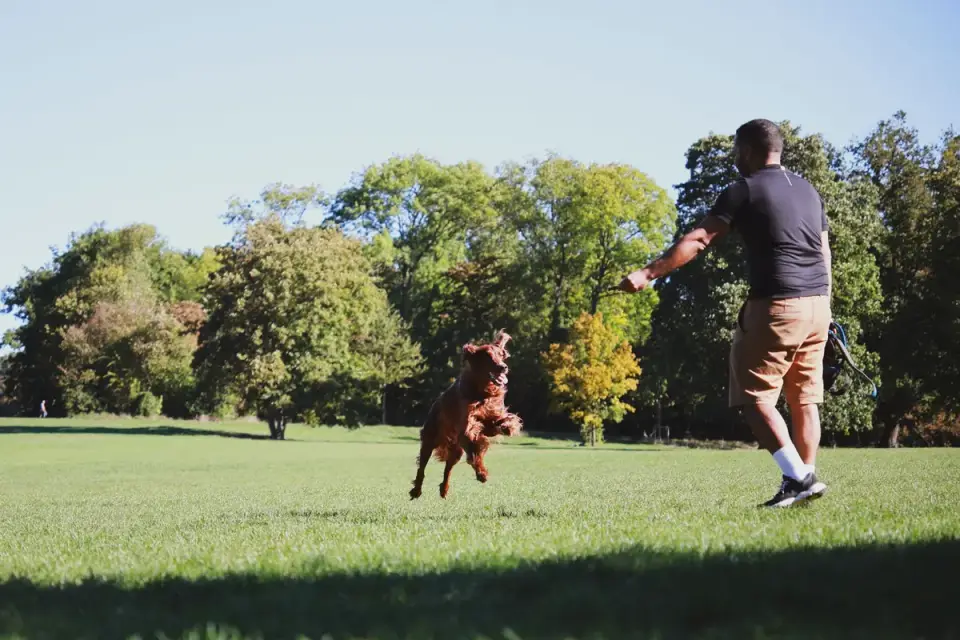
Consistency matters more than intensity. Older dogs hold muscle and joint comfort better on daily short sessions than on one long weekend outing.
The broader exercise literature points the same way. Debate continues over whether movement slows aging itself, reviewed in Does Regular Exercise Actually Slow the Aging Process in Dogs?, but the functional argument is settled enough to act on: dogs that keep moving keep the strength and conditioning that let them keep moving.
Federal guidance on human aging makes a parallel point. The National Institute on Aging notes that regular activity supports strength, balance, mood, sleep, and independence in older adults, which matches what veterinarians observe in mobility, confidence, and rest patterns in older dogs without equating the species.
The reason to do less, taken seriously
Pain is the best reason to pull back. Stiff rising, bunny-hopping, toe dragging, new panting at night, or a walk that ends much slower than it started deserves a recheck for osteoarthritis, neurologic disease, cardiac disease, or advanced periodontal pain. Pushing through those signs does not build fitness.
Davey, a 13-year-old neutered male Belgian Malinois from Davenport, Iowa, makes the point from the other side. His owner Ruben kept a log for two weeks and found Davey covered a half-mile well on flat ground but faded after eight minutes on a slope. The answer was not more hill work. It was flatter routes, shorter loops, added sniff breaks, and a vet visit that adjusted his joint and dental plan. Distance stayed about the same. Enjoyment rose.
That is still my landing place. Protect the mouth, protect the joints, then protect the habit. Daily activity relates to healthy aging because use preserves function, and function preserves independence.
The verdict for aging dogs
Keep the bar repeatable. Most healthy seniors do well with daily short walks, play in minutes rather than miles, weight control, and prompt care for oral pain and lameness. Reassess monthly. If activity falls for more than two weeks without a clear cause, schedule an exam rather than adding a supplement.
The mouth decides more days than owners expect. A comfortable mouth supports chewing, play, and walking. Walking supports everything else.
Sources
- Dog Aging Project — Dog Aging Project
- Exercise and Physical Activity: Getting Fit for Life — National Institute on Aging