
On this page
A brace does not replace a stable knee, and for some dogs with cruciate disease it trades one kind of strain for another.
What would have to be true for external support to help the stifle move more normally? The canine knee, or stifle, depends on the cranial cruciate ligament to prevent the tibia from sliding forward with each step, and once that ligament weakens or tears the joint becomes mechanically unstable. A rigid or semi-rigid sleeve can limit that abnormal motion and may help support comfort and proprioception, which is the nervous system’s sense of limb position, while the surrounding quadriceps, hamstrings, and core musculature either maintain strength or atrophy from disuse.
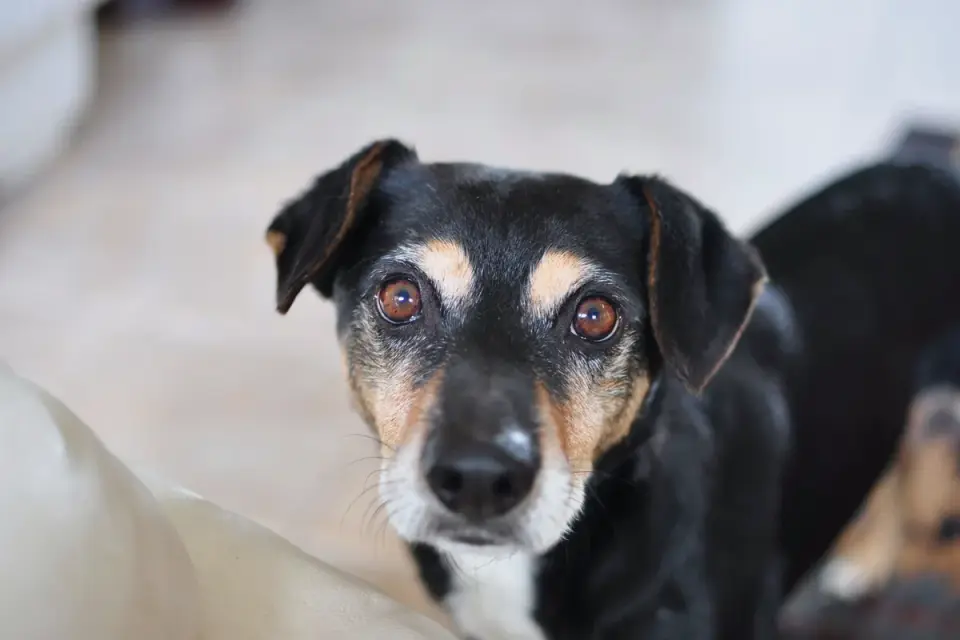
In practice, vets often see the same fork in the road: a large, active dog with an acute non-weight-bearing lameness versus an older dog with chronic stiffness that worsens after rest. Jayden, an 8-year-old neutered male Saint Bernard mix from Clarksville, Tennessee, illustrates the second pattern, when owner Susan noticed he needed three attempts to rise from a rug and then carried his left hind leg for the first 20 steps. That history points less to a simple sprain and more to progressive cruciate disease with compensatory muscle loss, where a brace alone cannot restore ligament integrity.
1. Diagnosis comes before any device
Hind-limb lameness in dogs has a wide differential, including cranial cruciate ligament disease, patellar luxation, hip dysplasia, neurologic weakness, and bone tumor. Cornell University College of Veterinary Medicine describes cranial cruciate ligament disease as a degenerative process that often affects both knees over time, not only a single traumatic tear. A veterinarian confirms instability with palpation for cranial drawer and tibial thrust, orthogonal radiographs to assess joint effusion and arthritis, and neurologic examination to rule out lumbosacral disease that can mimic knee pain.
This distinction matters because a brace that restricts stifle motion will not help a dog whose primary problem is hip pain or progressive myelopathy.
Vets reject one-size-fits-all bracing sold by leg circumference alone.
2. Where the evidence is strong, thin, and mixed
Surgical stabilization remains the best-supported treatment for most medium, large, and athletic dogs with complete cruciate rupture, and the American College of Veterinary Surgeons reviews osteotomy procedures such as tibial plateau leveling osteotomy alongside extracapsular techniques. Evidence for braces is thinner and largely biomechanical or observational: custom stifle orthoses may help support limb use in dogs that cannot undergo anesthesia, during pre-surgical waiting periods, or for partial tears managed conservatively with weight control and rehabilitation.
What would change this view is a randomized trial showing equivalent long-term function and arthritis progression between bracing and surgery in matched dogs. The current literature does not show that, which is why prolonged bracing without veterinary monitoring is difficult to defend.
Owners comparing joint-support strategies can read how this site weighs EPA vs. DHA Ratio in Fish Oil for Dogs: What Actually Matters for Joints and Brain and whether to combine a senior longevity chew with a joint supplement, because nutrition and body condition shape the same load the brace is trying to manage.
3. Fit decides whether support helps or harms
An ill-fitting knee brace creates pressure over the patellar tendon, fibular head where the peroneal nerve runs superficially, and the groin and hock straps. Too loose, it migrates and chafes; too tight, it may compromise circulation, irritate skin, or alter gait enough to overload the opposite hind leg. VCA Hospitals notes that cruciate recovery requires controlled activity and staged rehabilitation rather than unrestricted movement, a principle that applies equally when a brace is used.
A defensible fitting process includes precise measurements of thigh, stifle, and hock, a rigid lateral hinge aligned to the joint axis when prescribed, non-slip interfaces that do not require excessive strap tension, and a break-in schedule with daily skin checks.
Modalities such as controlled leash walks, underwater treadmill work, acupuncture, and Tui-na may help support muscle tone and body awareness around the stabilized joint, without overstating what they repair.
4. The daily protocol vets actually approve
Bracing works only inside a whole-patient plan. Weight normalization reduces tibial thrust force with every step, targeted strengthening preserves the quadriceps that secondarily stabilize the stifle, and pain assessment guides activity. Most veterinary rehabilitation plans limit brace wear to supervised activity periods, remove the device for rest and overnight, inspect for rubs twice daily, and recheck gait and thigh circumference every two to four weeks.
Stop and call the veterinarian if swelling develops above or below the brace, toes splay or drag, skin blisters, lameness worsens, or the dog chews the device relentlessly.
For digestion-safe weight management during reduced activity, some clinicians discuss fiber options, including Canned Pumpkin vs. Pumpkin Powder for Dog Digestion: The Vet Verdict.
5. The Vet Verdict on who should consider one
A vet-recommended knee brace means a veterinarian has diagnosed the cause of lameness, judged the dog a reasonable candidate for conservative or interim support, and prescribed a custom or carefully fitted orthosis with a monitoring plan. Good candidates are often older dogs with anesthetic risk, dogs awaiting surgery, or dogs with partial tears whose owners commit to rehabilitation and weight control. Poor candidates are dogs with undiagnosed lameness, unstable fractures, infected wounds under the brace area, progressive neurologic deficits, or rapidly worsening bilateral disease that needs surgical evaluation.
Ask for a referral to a surgeon or rehabilitation specialist when the diagnosis is uncertain, when both knees are affected, or when eight to twelve weeks of well-managed conservative care produces no measurable improvement in weight-bearing.
Frequently asked questions
Will a dog knee brace heal a torn ACL?
No. A brace cannot reattach or regenerate a torn cranial cruciate ligament; at best it may help support stability and function during conservative management or while awaiting definitive care, under veterinary supervision.
How long should a dog wear a knee brace each day?
Most vets recommend wear only during supervised activity with removal for rest, sleep, and skin inspection, with the exact schedule set by the prescribing veterinarian and adjusted at rechecks.
Can I buy a knee brace without a vet diagnosis?
It is not advisable. Hind-leg lameness has many causes, and an incorrect or poorly fitted brace can delay needed treatment, irritate skin or nerves, and overload the other leg.
Sources
- Cranial Cruciate Ligament Disease — American College of Veterinary Surgeons